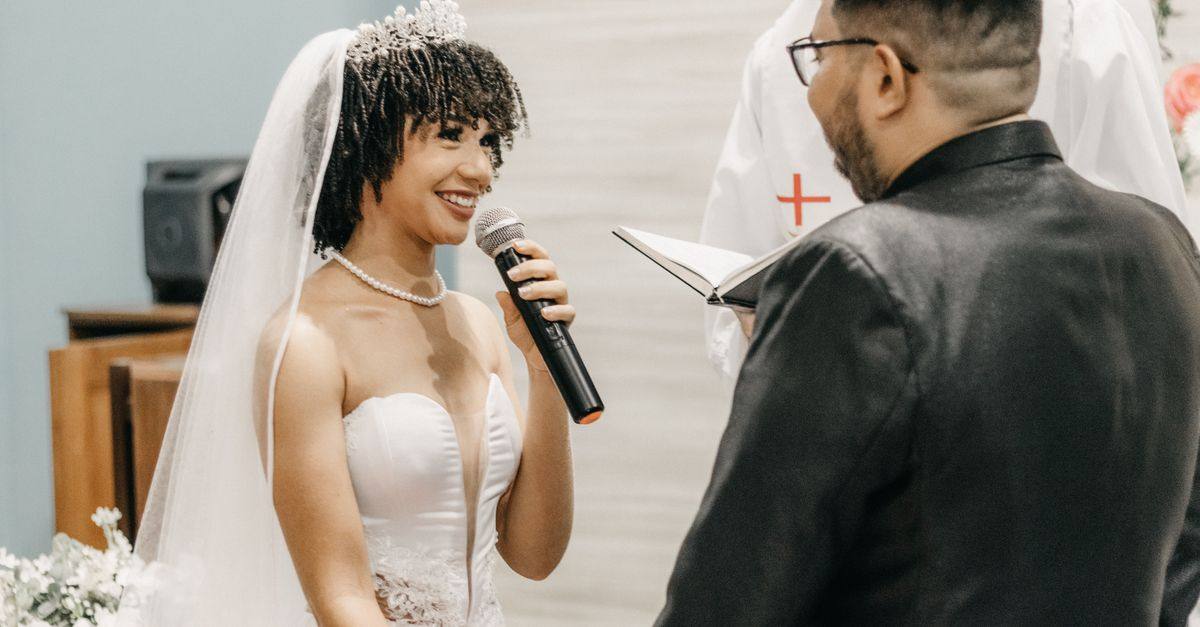
A wedding produces a lot of moments worth marking and one common mistake: trying to cover all of them in a single piece. Each design should do one job. Decide which moment you are preserving before you write a word.
Which moment are you preserving?
Pick one, and write down the facts before the feelings.
Note the date, the place, who was there, and the exact wording you are allowed to share. That last item matters more than people expect, because much of what happens around a wedding is said privately and only feels public in hindsight.
Then choose one of those details as the center of the piece. A design about the proposal is a different piece from one about the ceremony, and both are better than one design trying to be a timeline.
What are the moments worth marking?
More than the ceremony, and several of them are easier to write about.
- The proposal. The actual words used, or the detail nobody else knows — what the weather did, what went wrong, what was said immediately after.
- The engagement. A line about the period between the question and the planning, which is short and rarely recorded.
- The ceremony. An approved vow excerpt, kept brief.
- The thank-yous. Something for the people who did the unglamorous work.
- The first home together. Often the most quietly meaningful of the set.
Each of these has a natural recipient and a natural place, which is a useful test: if you cannot say who it is for and where it will live, the idea is not narrow enough yet.
Respect Privacy and Text Rights
Two checks prevent nearly every problem with wedding pieces: ask first, and confirm you are allowed to use the words.
Ask before you use someone else's words
A partner's private vow, a guest's message in the book, a parent's toast, or a friend's speech all belong to the person who said them. Reproducing them in a display piece is a different act from hearing them on the day, and a quick request avoids an awkward discovery later.
The same applies to identifying details. A place, a date, and two names are usually fine. A private circumstance mentioned in a toast may not be, particularly for a piece that will hang where visitors can read it.
Text rights, briefly
Use original, public-domain, or properly licensed text rather than copying a protected song or book passage. This comes up constantly at weddings, because the readings and the first-dance song are precisely the texts people want to keep.
The workable alternative is to write your own line about why that piece of text mattered. It sidesteps the rights question entirely and is usually more affecting than the quotation would have been.
If you use an assisted draft
If you are unsure where to start, the editor can draft a poem from a few details you provide, and every line stays editable before you order. Revise every line so it matches the actual event and the actual people, and verify each fact — a confidently wrong date is the classic failure here.
Keep the Design Focused
In the editor you can adjust the text and fonts and choose a background or photo. Use one readable excerpt, check names and dates, and review the full preview before checkout.
Can one piece cover the whole journey?
It can, and it usually should not. A design covering proposal, ceremony, and first home has to compress each into a phrase, and compressed phrases are generic by necessity. A set of separate pieces, or one piece done properly, both work better than a crowded compromise.
What makes a good proposal piece?
The detail that did not go according to plan. Proposal stories are remembered for the specifics — the wrong restaurant, the rain, the speech that came out backwards — and those specifics are what make a written version worth rereading. The polished summary is the forgettable one.
Is a wedding piece a good gift from a guest?
Yes, if you write from observation rather than assumption. One thing you have noticed about the two of them, said plainly, is a genuinely good gift. Avoid predictions about their marriage and anything referencing a previous relationship, which is a more common misstep than it should be.
When should we make it?
After the day, when you know which moments actually stayed with you. Deciding in advance which part of a wedding will matter most is guesswork, and the answer is frequently not the ceremony. For anything tied to a fixed date, check the current ordering information before you begin and keep a separate backup plan.
What about thank-you pieces for family?
They work best when they name the specific thing the person did rather than thanking them for their support. Whoever handled the seating chart, drove people around, or quietly fixed something on the day would rather see that recorded than receive a general acknowledgment.
For choosing vow lines specifically, see the vow excerpt guide, and for the announcement stage, the engagement announcement guide. Examples live on the wedding page and the engagement page.