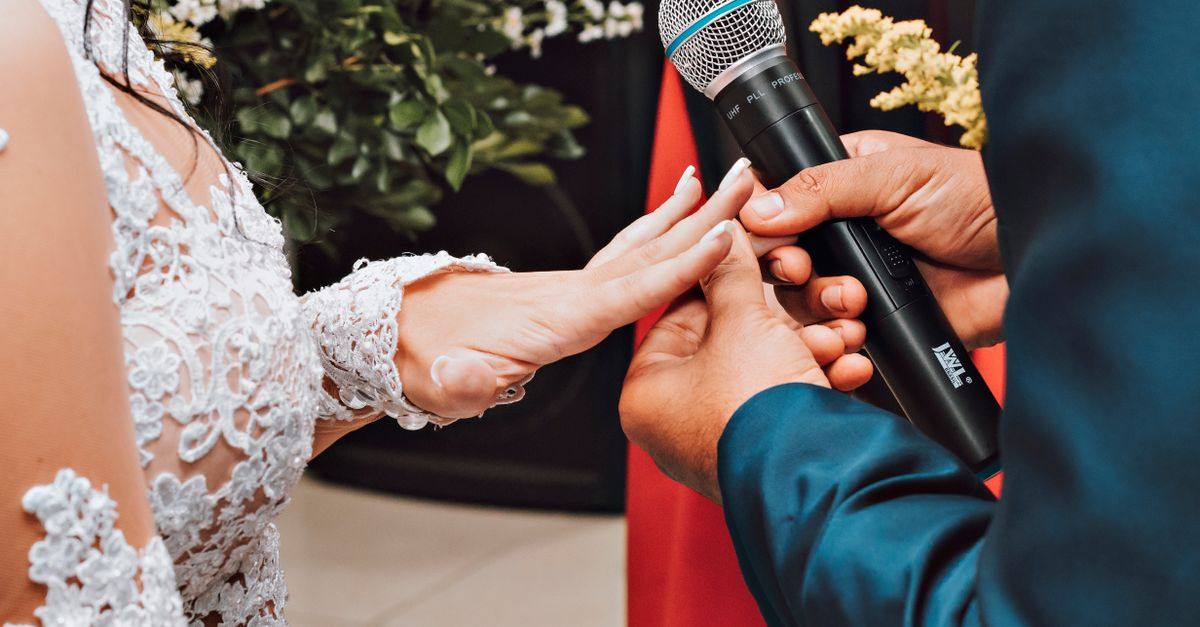
Your vows already contain the best writing you will ever do about your relationship, which makes them an unusually easy starting point. The work is not writing something new; it is choosing which lines you still want to read on an ordinary Wednesday.
Which lines should you use?
One promise, one shared value, or one closing.
Full vows are written to be heard once, in a room, with everyone paying attention. That is a different job from being read repeatedly by two people who live with them. The lines that survive the transition are usually the concrete ones: a specific promise, a named quality, the sentence that made someone in the second row cry.
Work from the actual document rather than from memory. People misremember their own vows with remarkable confidence, and the version in your head has usually been smoothed over time. If you wrote separately, read both again before deciding — the pairing you want may be one line from each.
Should you use both sets of vows or one?
Whichever produces a piece that reads as complete on its own.
Two paired lines, one from each of you, work beautifully when they answer each other. Two paragraphs side by side rarely do; they compete for attention and neither gets read properly. If the vows were traditional or identical, a single shared excerpt is usually the stronger choice.
Ask your partner before including anything private. Vows are said publicly, but a line can still feel private in a hallway where guests will read it, and that conversation is much easier to have before the piece exists.
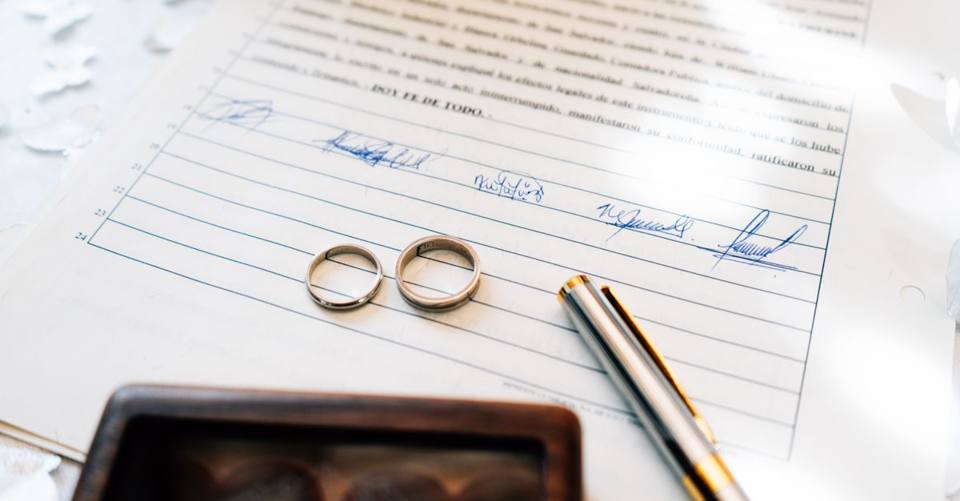
Build the Design Around the Words
The words are the subject. Everything else is there to keep them readable.
Choosing a photo or background
Pick an image with uncluttered space where the text will sit, or choose a simple background instead. Busy images and long text are in direct competition, and the text always loses. If the photo is the point, use fewer words; if the words are the point, give them room.
A wedding photo is the obvious pairing and not always the best one. A picture of the place, the light, or something ordinary from the day can carry the words without pulling attention toward faces.
Keeping the type readable
Limit decorative flourishes, and make sure names and dates do not compete with the excerpt itself. A common mistake is setting the date as large as the vow, which turns a promise into a certificate.
Read the piece at the size it will actually be viewed. Text that looks elegant while you are designing can become unreadable at normal viewing distance, and that is exactly the kind of thing the preview is for.
If the vows include text you did not write
Liturgical wording, a passage from a reading, or a line from a song used in the ceremony all carry rights considerations. Use your own words, public-domain text, or text you have permission to reproduce. Attribution by itself does not grant permission, and "it was in our ceremony" is not a license.
Where a borrowed line matters to you, one workable approach is to write your own sentence about why that passage was chosen. It is often more moving than the passage, and it is unambiguously yours.
Check the Full Preview
In the PlakYourPoem editor you can write or paste your own poem, adjust the text and fonts, and choose a background or photo before ordering. You see a full preview of your plaque design before checkout, which is the moment to confirm the excerpt reads well and the names and date are correct.
How much of the vows should I actually use?
Less than you expect. One to four lines is a workable range for something meant to be read often. The full text belongs in a document you keep; the excerpt belongs on the wall. Trying to fit everything produces small type that nobody reads twice.
What if we did not write our own vows?
Use something else from the day. The line you said to each other before walking in, a phrase from the toast, the sentence you both remember from the ceremony, or a promise you have made since. Traditional vows are also often shared text with rights considerations, so your own words are the safer and warmer option.
Is this a good anniversary gift or should it be done right away?
Both work, and the anniversary version has an advantage: by then you know which lines you actually kept. A promise that turned out to be central to the marriage is a better excerpt than the one that sounded best on the day.
Should both partners choose the excerpt together?
If it is going in a shared space, yes. A vow excerpt is a statement about the relationship displayed where both of you live, so a two-minute conversation prevents the awkward situation of one person quietly disliking it for years. Surprises work better for a personal piece than a shared one.
Can we include the wedding date and names?
Yes, and keep them subordinate to the words. Set them smaller than the excerpt so the piece reads as a promise with a date attached rather than as a record with a quote attached. Check the spelling of both names once more at preview.
For the wider set of moments worth marking, see the proposal-to-ceremony guide, and for the first year afterwards, the first-anniversary approach. Finished examples live on the wedding ideas page and in the gallery.