
A graduation tribute needs two things: the achievement stated accurately, and one specific sentence about the person. Start with their preferred name, the credential or program, the institution, and the year, then write the part that is actually about them.
What makes the message personal?
Something from the middle of the degree, not the end of it.
Ceremonies celebrate the finish. The interesting part is the one nobody photographed: the semester that nearly did not work, the subject they changed their mind about, the mentor who made a difference, the routine they invented to get through it.
Name one of those and the tribute stops being interchangeable. Avoid claims about what every graduate feels and promises about where this will lead — the future is not yours to guarantee, and the graduate knows it.
How do you get the formal details right?
By checking them rather than assuming.
Credential wording is specific and easy to get wrong. Program names change, honors have exact phrasing, and the difference between a degree title and a department name matters to the person receiving it. Confirm the formal wording with the graduate or the institution.
Also confirm the name they want used. A preferred name, a new surname, or a chosen name is not a detail to guess at on a piece meant to be kept.

Use the Right Voice
Who is speaking changes what the piece should say.
From a parent
Write about change over time, since you have the longest view. One thing you watched them get better at, or one moment you knew they would finish, is more moving than a statement of pride. Pride is assumed; the observation is the gift.
From a friend
Write about the middle of it. Friends have the details nobody else does — the specific bad week, the running joke about a professor, the thing they said at two in the morning that turned out to be right. Keep it kind and keep it printable.
From the graduate
Write to your future self rather than about your achievement. A line about what you learned that was not on the syllabus will mean more in ten years than a restatement of the credential, which is already on the certificate.
Keep it concise and correct
Verify formal credential wording with the institution when a factual designation is used, and keep the tribute short enough to read in a glance. Use original, public-domain, or properly licensed text rather than copying a protected quotation, however apt it seems.
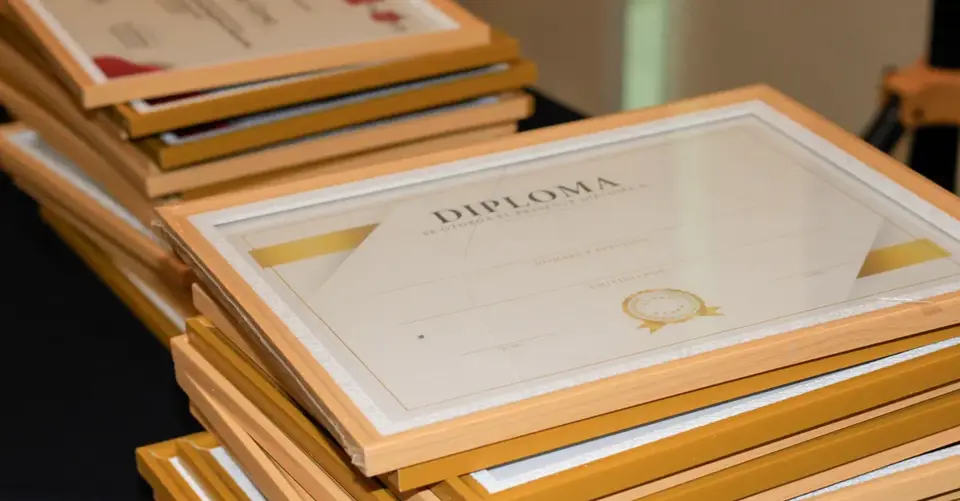
Check the Design and Timing
In the editor you can adjust text and fonts, choose a background or photo, and review the full preview before checkout. For a date-sensitive gift, check the current ordering information and keep a separate backup plan.
What should a graduation plaque actually say?
The name, the credential, the institution, the year, and one specific line about the person. That last element is what separates a tribute from a record. Without it the piece duplicates the certificate the graduate already has, in a less official form.
Is a quotation a good idea?
Usually not as the main text. Famous graduation quotations are heavily used and frequently still protected, so they are both less personal and more complicated. If one genuinely matters, write your own sentence about why it matters to this graduate instead.
What works for a graduate who is unsure about their next step?
Write about what they did, not about what comes next. Forward-looking wording lands badly on someone without a plan, and it dates quickly if the plan changes. A line about how they handled the hard part is true regardless of what happens after.
Does this work for other kinds of graduation?
Yes — trade qualifications, certifications, language programs, and returning to school later in life all suit the same structure. Get the formal designation right, then write about the person. Non-traditional paths often produce the more interesting specific detail.
Should the graduate see it first?
For anything with formal credential wording, a quick check is worth more than the surprise. An incorrect program name or a misspelled institution is exactly the kind of error that gets noticed on a piece meant to mark an achievement.
For milestone wording more generally, the Father's Day guide uses the same approach to writing about a relationship, and the gift-giving guide covers finding the detail worth using. Examples live on the graduation ideas page.