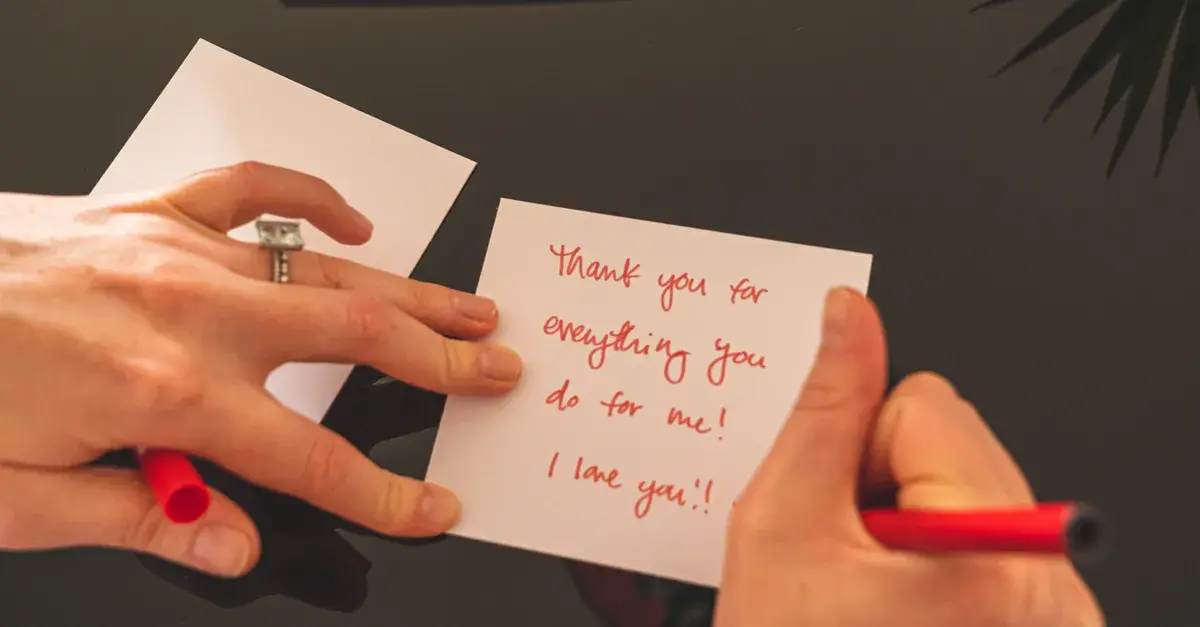
Write about one true, specific thing only you know about your husband: a habit, a shared routine, a joke, or a moment you keep returning to. Then shape it into a few short lines in a tone he would recognize as his own. Specific details beat grand declarations every time.
Where do you start when the page is blank?
Start with a list, not a poem. Jot down five small things: what he does when he thinks no one is watching, a sentence he says often, a place that feels like the two of you, a hard stretch he helped you through, and something you have never quite thanked him for.
Do not edit as you list. Write the first thing that comes, even if it seems too small. The smallest items, like the way he double-checks the locks or hums off-key in the shower, are often the most him.
Circle the item that makes you smile or catches in your throat. That one is your poem. The rest can be cut, or saved for a card or a future gift.
What tone suits him?
The right tone is the one he would not squirm at. A plaque hangs where visitors see it, so think about how he feels about public sentiment. Some husbands love an openly tender line; others prefer humor with one sincere turn at the end.
- Tender: plain, quiet lines about being known and chosen.
- Playful: an inside joke that lands on a warm final line.
- Steady: gratitude for the way he shows up, written without flourish.
- Adventurous: roads, trails, or trips that carry your shared story.
If you are unsure, imagine him reading the plaque aloud to a friend. Whichever version he could say without laughing it off or looking away is the tone to choose.
How can one real detail carry a whole poem?
A single concrete image can do the work of a dozen adjectives. Compare a line like "you are my everything" with a line about him warming the car on cold mornings before you walk out. The second one is unmistakably his, and it says the same thing more honestly.
Look for images tied to ordinary life: the coffee he makes first, the porch light he leaves on, the way he hums while cooking. Let the detail carry the feeling instead of announcing it.
A useful test is to ask whether anyone else could have written the line about anyone else. If the answer is yes, swap it for something only the two of you would recognize.
What structure keeps a plaque poem readable?
Short wins on a wall. Four to eight lines usually reads comfortably at a glance, and a shorter poem leaves room for the text to breathe. If you want guidance on length, our piece on how long a poem should be goes deeper.
- Open with the image: where or when you see him.
- Add one line about what he does or what he means to you.
- Turn toward a promise, thanks, or a small joke.
- End on a short line that sounds like something you would say out loud.
What does the wording look like in practice?
Here are rough shapes to adapt, not lines to copy. For a steady husband: a few lines on the quiet ways he keeps the house and the family running, closing with thanks. For a playful one: a running joke about his terrible sense of direction, ending with "and I would still follow you anywhere."
For an anniversary, name the years or the place you began. For a birthday, look back at who he was when you met and who he has become. For a plain "just because" plaque, pick the smallest everyday moment and honor it.
What if you do not think of yourself as a poet?
You do not need rhyme. Plain sentences broken into lines are a poem, and they often read as more sincere than forced rhyme. If you want a nudge, the editor can draft a poem from a few details you share, and you can rework every line.
If you are unsure where to start, the editor can draft a poem from a few details you provide, and every line stays editable before you order.
For more wording ideas aimed at a spouse, see words to put on a plaque for your wife, which adapts easily, or the guide to writing a poem that tells your story.
Quick answers to common questions
Should the poem rhyme?
Only if rhyme comes naturally. Honest, plain lines almost always read better than a forced rhyme.
Should I include his name?
It is optional. A name makes the plaque feel addressed to him; leaving it out makes it feel more universal and easier to display anywhere.
What if he is not sentimental?
Lean on humor, shared adventures, or understated gratitude. One sincere line tucked inside a lighter poem can land harder than a page of tenderness.
Can I edit before I order?
Yes. You can adjust the text and fonts and pick a background or photo in the editor.
In the PlakYourPoem editor you can write or paste your own poem, adjust the text and fonts, and choose a background or photo before ordering.
You see a full preview of your plaque design before checkout.
A short summary
Pick one specific detail, choose a tone he will enjoy, keep it to a handful of lines, and end on a sentence that sounds like you. If you want a place to look for more ideas on the poem itself, our love poem guide for your partner is a good next read, and gift ideas for your husband show how others approach the same task.