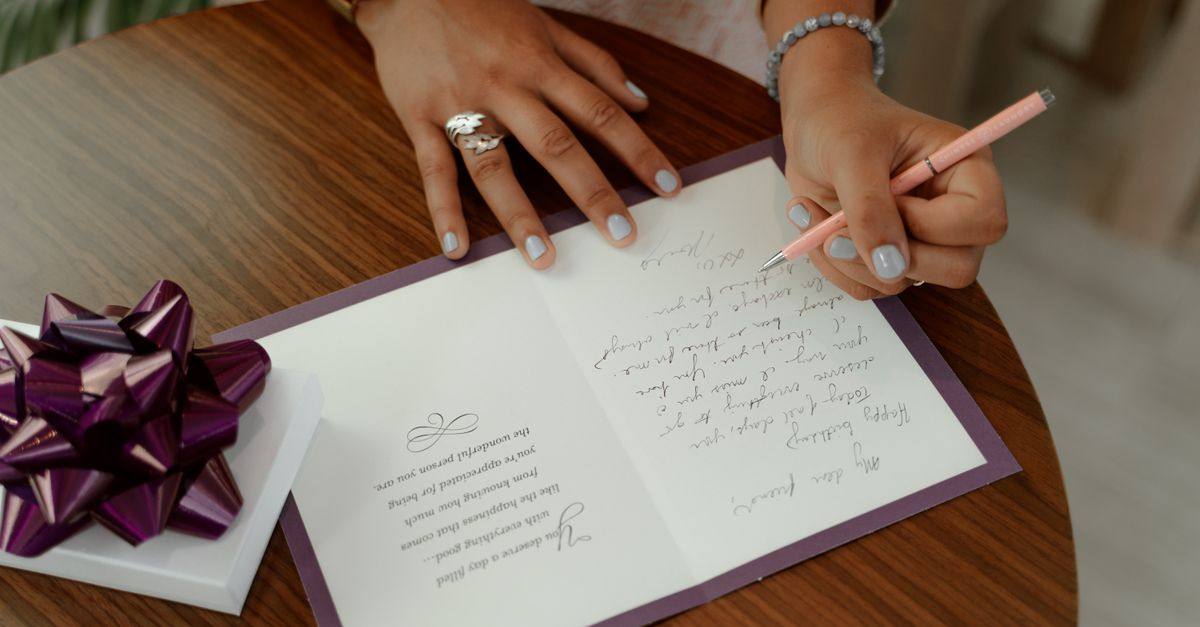
To write a love poem for your partner, start with one ordinary moment only the two of you would recognize. Describe what happened, name what it showed you about them, and end with what you want them to know now. You do not need rhyme, grand claims, or a borrowed quotation.
What should you collect before writing?
Make a short evidence list before you try to sound poetic. Five notes are enough:
- One routine: the coffee they leave ready, the walk you take, or the message they send at the same time each day.
- One turning point: a difficult week, a decision you made together, or the moment the relationship began to feel different.
- One sensory detail: a sound, object, place, texture, or smell connected to a shared memory.
- One quality in action: not simply “kind,” but the thing they did that showed kindness.
- One present-tense truth: what their presence changes in your daily life now.
Use details you know are accurate. If a date, quotation, or version of a memory is uncertain, check it with your partner or leave it out.
How do you turn those notes into a draft?
Use a three-part movement: scene, meaning, and message. Open inside the ordinary moment. Then explain what the moment reveals. Finish by speaking directly to your partner in the present tense.
Here is a clearly hypothetical example:
You leave the porch light on
when my train runs late.
That small square of welcome says
I am expected, and I am home.
The example works from one visible action. Replace every detail with something from your own relationship; otherwise the poem will still sound like an example.
Choose a Structure That Matches the Story
A simple structure keeps the first draft moving. Pick one shape and stay with it until you have a complete version.
Detail → meaning → message
Name something your partner does, explain what it means to you, then address them directly. This is the most useful shape when one small habit carries the whole poem.
Before → turning point → now
Use three moments rather than retelling the entire relationship. Begin with what life felt like before, choose the event that changed your direction, and end with what is true now.
“I notice” list
Write four to six lines that begin with “I notice,” “I remember,” or “I love how.” Make every ending concrete. “I notice you check the door twice when a storm starts” gives the reader something to see; “I notice how caring you are” does not.
Does a love poem have to rhyme?
No. Rhyme is one option, not a requirement. Keep it only when the rhyming word is a word you would naturally use. If the sentence bends just to reach a rhyme, write the sentence plainly and keep the stronger detail.
What should you cut from the first draft?
- Any line that could describe almost any couple.
- Repeated praise that does not add a new image or idea.
- “Always” or “never” when neither is literally true.
- A private detail your partner would not want displayed or shared.
- Protected lyrics, book passages, or quotations you do not have permission to reproduce.
Read the remaining lines aloud. Put a line break where your voice naturally pauses, and combine lines that break the same thought without a reason.
Edit It Until It Sounds Like You
Use three editing passes. First check truth: names, dates, places, and what actually happened. Then check voice: replace formal or exaggerated wording with language you would say to your partner. Finally check focus: keep the one image or idea the poem is really about.
How long should the poem be?
Long enough to complete the scene, meaning, and message, but short enough to read aloud without rushing. If two lines make the same point, keep the more specific one. The design preview will show whether the wording still has enough room to breathe.
How personal is too personal?
Ask where the finished words may be seen. A detail that feels right in a private note may feel exposed on a wall or in a shared image. Keep the intimacy, but remove information your partner would not choose to display.
Can you use a line from a song or book?
Use your own words, public-domain text, or text you have permission to reproduce. Finding a line online or naming its author does not by itself grant permission. Writing about the memory attached to a song is often more personal than copying the lyric.
What if the page is still blank?
Answer these prompts in plain sentences: “The moment I keep returning to is…,” “You showed me who you are when…,” and “What I want you to know now is….” Put the three answers in order, remove the prompt wording, and read the result aloud.
In the PlakYourPoem editor you can write or paste your own poem, adjust the text and fonts, and choose a background or photo before ordering. If you are unsure where to start, the editor can draft a poem from a few details you provide, and every line stays editable before you order. You see a full preview of your plaque design before checkout.
Before you finalize the piece, verify every personal detail, remove one line that sounds generic, and ask whether your partner would be comfortable seeing the remaining words displayed. The goal is not to sound like a poet. It is to sound recognizably like you.