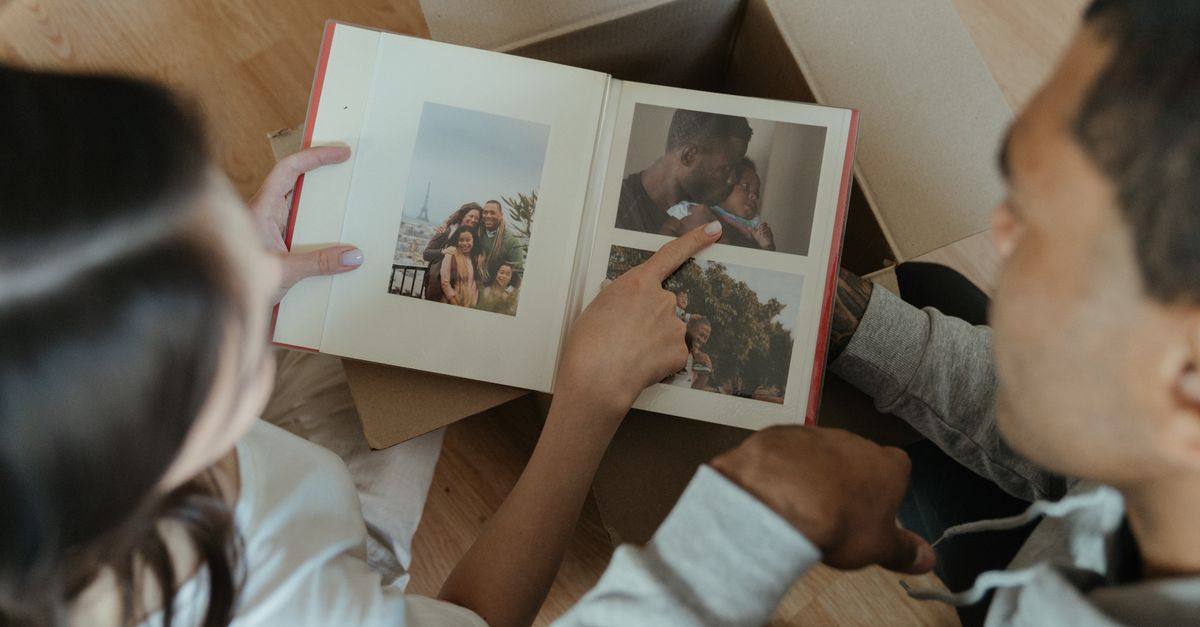
A poem feels personal when it uses details that belong only to your relationship: a place, a phrase, a small ritual, a moment you both still bring up. The effect comes from evident attention, not from clever wording. Specificity is the whole technique.
Which details make a poem feel personal?
The ones that would make no sense to anyone else.
Here is the test. Read your draft and ask whether it could be handed to a different person without changing a word. If it could, it is a nice sentiment rather than a personal one. "You make me happy" survives that swap. "You always reach for my hand at the same corner" does not, which is exactly why it works.
Start by writing down three concrete memories. Not themes, not qualities. Actual events with a location and a detail attached. The kitchen, the hospital parking lot, the fourth day of the trip when everything went wrong and somehow got funny.
Why do generic lines feel worse than no gift?
Because they announce that the thinking was skipped.
Broad praise is safe, and safety is the problem. When someone reads a line that could have been written about anyone, they do not read it as affection; they read it as effort avoided. A slightly awkward line about the specific way they load a dishwasher reads as devotion, because nobody produces that detail by accident.
This is good news if you are not confident about writing. You are not competing on craft. You are competing on noticing, and you have been gathering the raw details for as long as you have known them.

Build the Message Around Your Own Story
Pick one emotional center rather than trying to summarize an entire relationship in eight lines.
Narrow before you write
A short piece about Sunday coffee, the first apartment, or a joke that stopped being explained years ago will land harder than an inventory of everything you feel. The instinct to cover everything is the most common reason these pieces come out flat.
Choose one of these and stay inside it:
- One recurring moment in an ordinary week.
- One thing that changed in you because of them.
- One small act they perform without being asked.
- One thing you understood only in hindsight.
Turn the memory into lines
Write the memory as plain prose first, the way you would tell it to a friend. Then cut it to the three or four phrases that carry the feeling, and break the lines where you would naturally pause if you were speaking. That is usually a poem already.
Read it aloud. Anything that makes you wince is either too general or borrowed from something you have heard before. Cut it. Anything that makes you slightly embarrassed because it is so specific is almost certainly the best line in the piece; keep that one.
Use a draft as a starting point, not an ending
If you are unsure where to start, the editor can draft a poem from a few details you provide, and every line stays editable before you order. Treat that draft as scaffolding: replace the general lines with your own language, check every detail against what actually happened, and keep only what sounds like you.
Text you did not write needs permission. Use your own words, public-domain text, or text you have the right to reproduce, since attribution by itself does not grant it.
Review Before You Order
Check names, dates, spelling, and the crop of any photo. You see a full preview of your plaque design before checkout, so use that moment properly: read the words at the size they will actually be read, and confirm the message still sounds like you rather than like a card.
How long should a personal poem be?
Short enough to be read many times. Four to eight lines is a comfortable range for a piece meant to sit in a room, because it can be taken in at a glance and still reward a closer read. Long pieces get read once, admired, and then function as decoration rather than as a message.
Does it need to rhyme?
No, and forcing a rhyme is the fastest way to make a personal poem sound impersonal. Rhyme pulls your word choices toward whatever fits the sound, which is precisely where generic phrasing sneaks in. Write it the way you speak, then break the lines where you would pause.
What if the detail I want to use is embarrassing?
That is usually a sign it belongs. Mild embarrassment means the detail is genuinely specific to the two of you. The only real test is whether your partner would be comfortable with it being visible in a room where other people can read it, so consider the audience of the space before you commit.
Can I write one for a partner I have only recently met?
Yes, provided you write from what you actually know rather than what you hope. A short piece about one real evening is honest and will age well. A sweeping declaration about forever, written early, tends to feel dated fast, and you can always write the bigger one later.
Should I show it to them before ordering?
It depends on whether the surprise matters more than the accuracy. If the piece contains dates, names, or family details, a quiet check with someone else who knows them is worth more than a flawless reveal, because a misspelled name is the one thing that will be noticed every single time.
For a longer walkthrough of getting the first draft down, read writing heartfelt poetry with no experience, or see how the same approach applies to an occasion in the first-anniversary guide. To see finished examples, browse the gallery or the gifts for your wife and gifts for your husband pages.