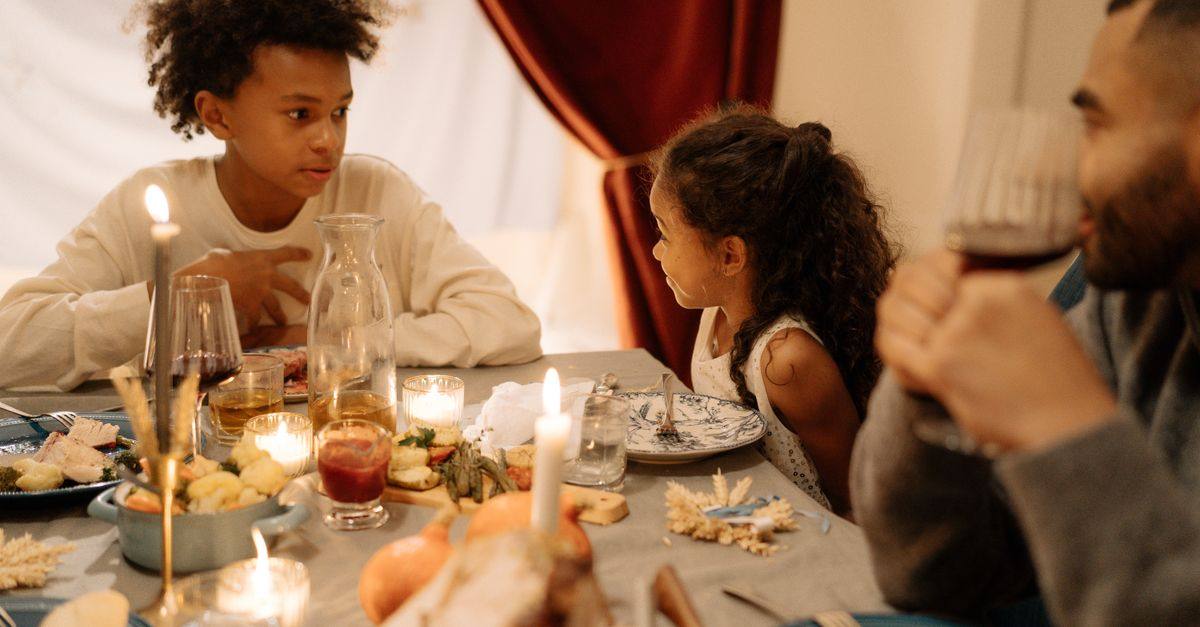
A gratitude wall can be one original line from each willing participant, collected in an afternoon. The goal is a record of what your family noticed this year, not a performance of togetherness and not a claim about the benefits of gratitude.
How do you start?
With a prompt and an easy way out.
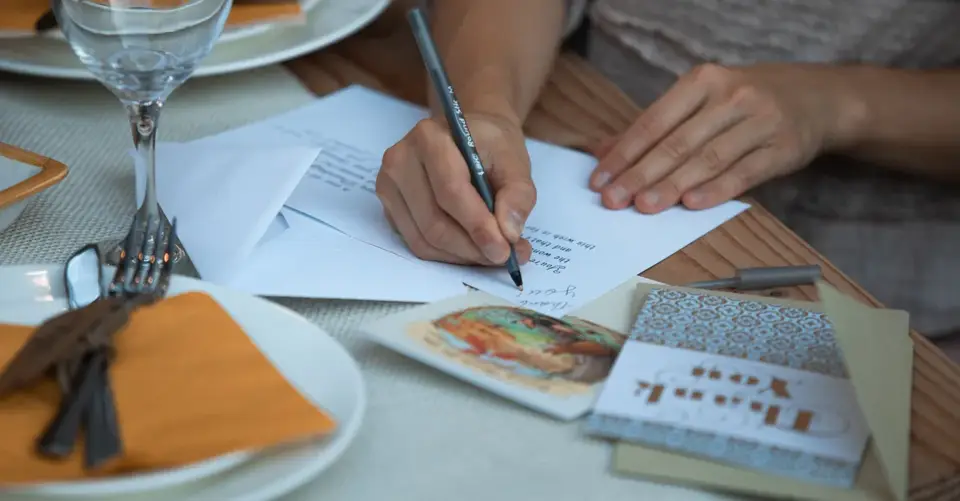
Offer something open: "This year I appreciated..." or "A moment I want to remember is...". Then let people write privately, contribute a drawing instead, or decline entirely. The opt-out is what makes the rest of it work — a compulsory gratitude exercise produces compulsory-sounding gratitude.
Give people paper and a few minutes rather than putting them on the spot at the table. Written-in-private answers are consistently more specific than spoken-in-front-of-everyone ones, and specificity is the whole value of the exercise.
What makes a good line?
A detail rather than a category.
"I'm grateful for my family" is what people write when put under pressure. "I'm grateful that someone drove me to the airport at five in the morning without complaining" is what they write when given a minute and a piece of paper. The second is worth keeping; the first could have been written any year by anyone.
If a contributor is stuck, ask what surprised them this year, or what they nearly forgot until now. Those questions tend to produce something concrete.
Make the Prompt Work for Different Ages
The prompt stays the same; the format adapts.
By age
Young children can dictate a sentence to an adult, which usually produces the best line of the day. Older children and adults can write a list, a short note, or a few lines of verse. Anyone who would rather draw should draw.
Do not correct a child's phrasing into something more polished. The odd construction is the part that will be worth rereading later, and smoothing it out removes the person from the sentence.
Ask before you display anything
Check before showing names, health details, or stories that belong to someone else. A line about a hard year is a gift when the person offers it and an exposure when someone else displays it on their behalf.
Keep the original wording unless the writer approves a change. A small spelling correction is fine; a rewrite is not, because it quietly replaces their voice with yours.
Repeating it
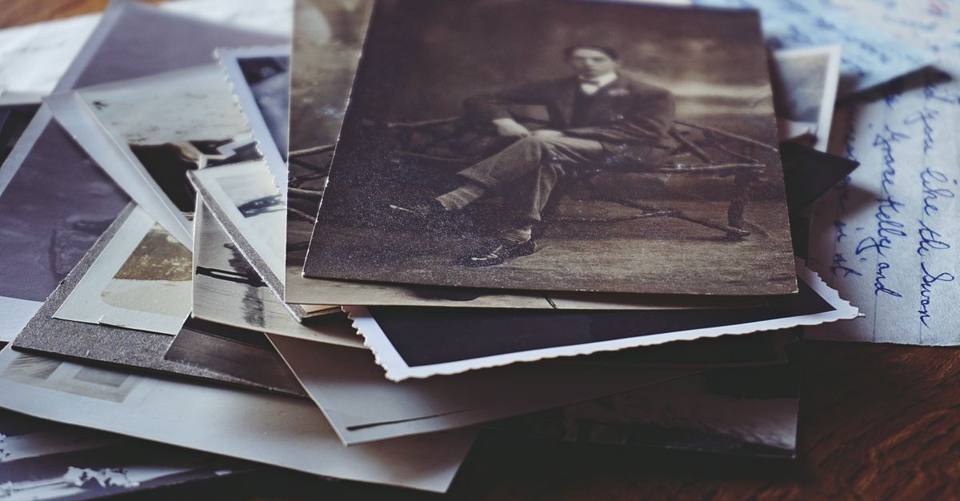
If you do this more than once, keep the previous years' lines. A single year's collection is a nice afternoon. Several years side by side becomes something else entirely — a record of who was there, what was going on, and how the children's handwriting changed.
Turn One Approved Line into a Design
Choose a line the writer is happy to share, pair it with a family photo only when you have permission, and check every name and date. The editor lets you adjust text and fonts, choose a background or photo, and review the full preview before checkout.
What if someone does not want to take part?
Let them not take part, without commentary. A visible opt-out is what keeps the exercise from feeling like an obligation, and someone who declines one year often joins the next. Pressing the point is the fastest way to end the tradition.
Should the lines be anonymous?
Attributed is usually better, since half the value later is knowing who wrote what. But offer anonymity to anyone who wants it, particularly older children and anyone going through something difficult. Mixed attribution is perfectly fine.
How do we choose which line to make into a piece?
Ask the group rather than deciding privately. Reading the collected lines aloud and picking one together avoids the awkwardness of one person's contribution being singled out by someone else's judgment, and it usually produces a better choice.
Can this work for a small household or one person?
Yes. The same prompt works alone, and doing it annually gives you a private record of what each year contained. Without the group element it becomes a short reflective habit rather than an event, which suits some households better anyway.
What do we do with the lines afterwards?
Keep the originals, whatever else you do. Turning one line into a finished piece marks the year, but the handwritten sheets are the archive, and they are the thing people return to years later.
For the design side of putting words on a wall, see choosing poetry for each room, and for collecting memories from older relatives, the family memory guide uses a similar approach. Designs you can personalize live in the gallery.